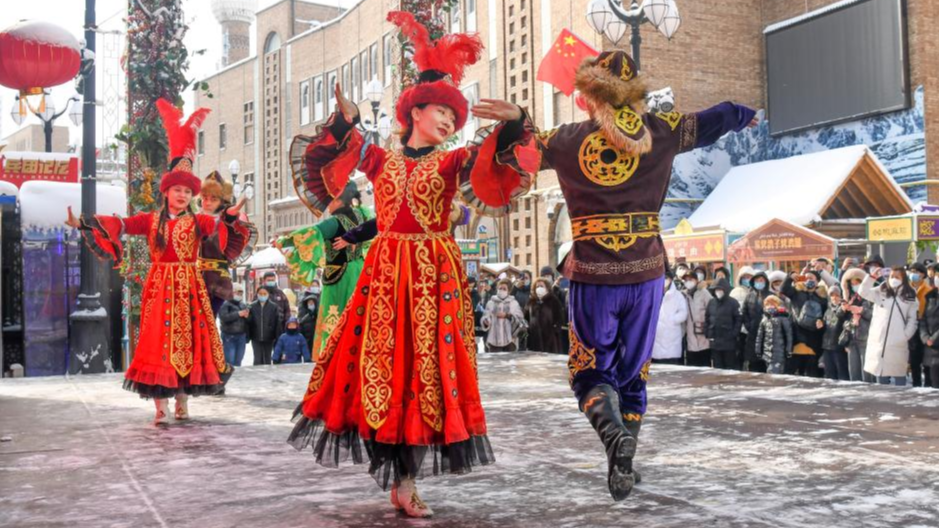
Uygur Sainaim Dance
Introduction
The sainaim dance is one of the most widespread and cherished forms of folk dance among the Uygur ethnic group in Northwest China's Xinjiang Uygur autonomous region. Found across the towns and villages of the Tianshan Mountain region in Xinjiang, sainaim holds a central place in the daily lives of Uygur communities. Whether celebrating festivals, weddings or family gatherings, sainaim performances serve as an expression of joy and cultural unity. Characterized by its vibrant movements and harmonious melodies, it embodies the rich traditions of Uygur culture.
The origins of sainaim trace back centuries to the agricultural and oasis-based societies of southern Xinjiang. By the 16th century, the dance had become deeply integrated into the "Twelve Muqam", a monumental collection of Uygur musical works. Folk musicians of the time refined and systematized sainaim, blending it seamlessly with other traditional art forms.
Features
Sainaim is performed to the accompaniment of traditional Uygur instruments, including the dutar (a two-stringed lute) and suona (a double-reed wind instrument).
Wubao sainaim, for instance, consists of nine suites featuring a variety of folk songs that cover themes of love, daily life and the joys and sorrows of the community. Performers combine graceful movements with lively rhythms, engaging both the dancers and the audience in a shared cultural experience.
Kaqen sainaim is particularly notable for its intricate structure, comprising over 50 melodies and 150 poetic verses. It incorporates interactive elements, such as humorous folk games and audience participation, creating a festive and inclusive atmosphere.
Cultural Significance
Sainaim is more than just a form of entertainment; it is a repository of Uygur cultural memory. Through its music, lyrics and choreography, the dance reflects aspects of the Uygur people's ancient beliefs, social customs and artistic heritage.
In addition, sainaim serves as a medium for storytelling, with its songs often recounting tales of love, resilience, and communal values. It has become a symbol of Uygur identity, connecting generations and fostering a sense of pride in their shared heritage.
Preservation
Despite its cultural significance, the survival of sainaim faces challenges in the modern era. The influence of globalization and the influx of external cultural elements have led to a decline in its practice. Younger generations, in particular, are less familiar with traditional art forms, resulting in a growing gap in transmission.
Efforts to preserve sainaim include its recognition as a national intangible cultural heritage in 2008 and the establishment of training programs to teach the dance to younger members of the community. Local governments and cultural organizations in Xinjiang have organized festivals and performances to promote awareness of this precious art form. However, continuous support and investment are essential to ensure its sustainability for future generations.








